Chinese New Year is one of those rare moments when communities across the world move in sync.
Nowhere is this more intense than in China. In cities like Beijing, Shanghai and Guangzhou, hundreds of millions travel home in what is often described as the largest annual human migration in the world. Beyond mainland China, the festival takes on distinct local character shaped by history, migration and community. Here is the list of places you can celebrate Chinese New Year around the world.

Vietnam
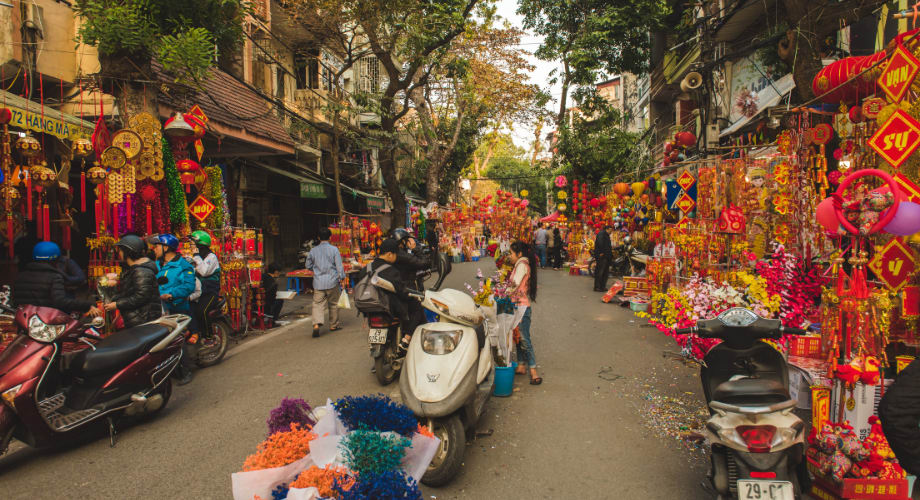
In Vietnam, the new year celebration is called Tết, and it centres on family and symbolism.
In Hanoi, the Quảng Bá Flower Market stays open through the night in the days leading up to the holiday, selling peach blossoms that will fill homes across the capital. In Ho Chi Minh City, Nguyễn Huệ Flower Street becomes a pedestrian promenade lined with elaborate floral installations and light displays.
Families prepare bánh chưng in the north and bánh tét in the south. Ancestors are honoured at household altars. On the first morning of the new year, many visit pagodas to pray for health and prosperity.
After the fireworks and countdowns, the coastline offers a slower beginning. In Quy Nhơn, quiet beaches and fishing boats at sunrise provide space to reset before the year gathers pace.
Where to stay: Avani Quy Nhon Resort sits on Bai Dai Beach, offering a private stretch of coastline for those who prefer celebration followed by calm.
Bangkok, Thailand
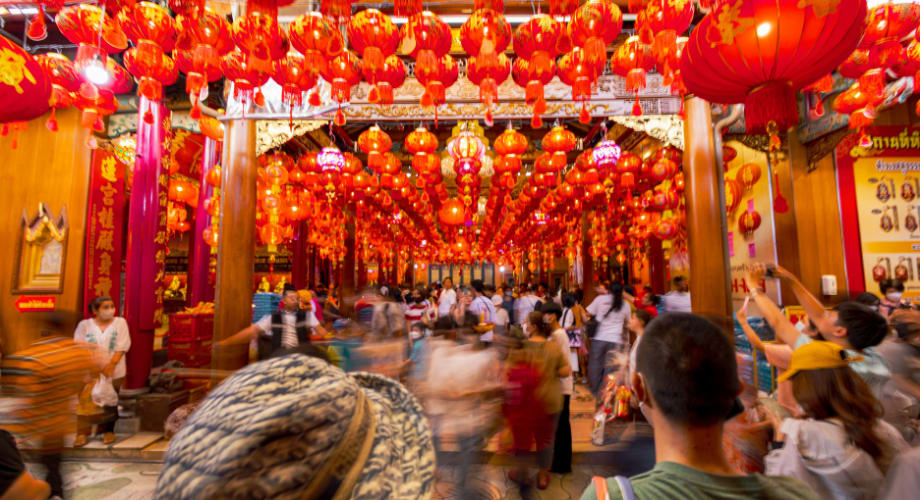
Bangkok’s Chinese New Year celebrations are centred on Yaowarat Road in Chinatown, home to one of the largest Chinese diaspora communities in Southeast Asia.
The stretch between Odeon Circle and Wat Mangkon Kamalawat fills with dragon and lion dances, live performances and food stalls operating late into the night. Families queue at Wat Mangkon, Bangkok’s most important Chinese temple, to light incense and pray for prosperity. The atmosphere is dense, energetic and unmistakably communal.
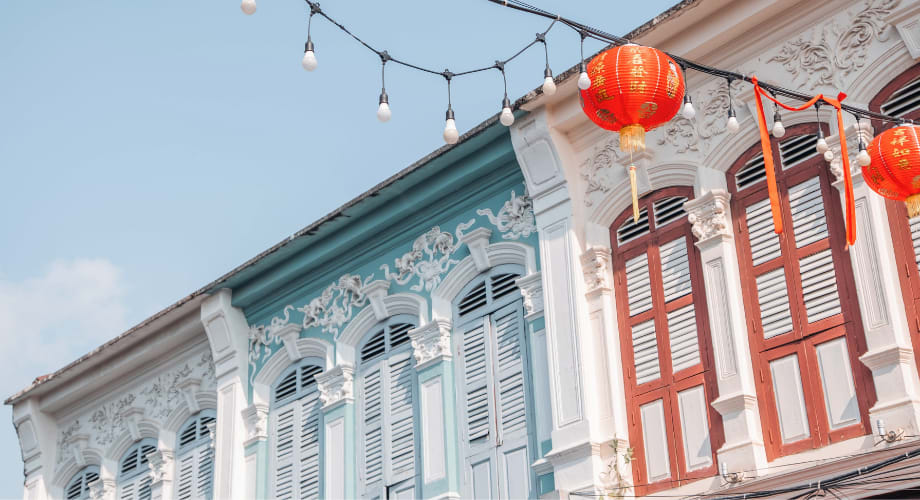
Just one street away from Yaowarat, Songwat Road offers a more contemporary layer, with restored shophouses housing independent cafés and creative spaces, many framed by lanterns during the festival.
Where to stay: Avani+ Riverside Bangkok places you within easy reach of Yaowarat while offering panoramic views of the Chao Phraya River. It gives you space to recharge after a night in the middle of the celebrations.
Phuket, Thailand
Beyond the capital, the festival is strongly observed in southern Thailand. Phuket is a major hotspot, particularly in Phuket Old Town, where Sino-Portuguese shophouses glow beneath lanterns and cultural performances take over Thalang Road. In Thailand’s deep south, including Pattani, Narathiwat, Yala, Satun and Songkhla, Chinese New Year is officially recognised as a provincial public holiday, reflecting the long-standing presence of Thai-Chinese communities in the region.
Where to stay: Avani+ Khao Lak Resort in Phang Nga offers a beachfront escape just north of Phuket. It is ideal for pairing the energy of the festival with a quieter coastal reset.
London, UK
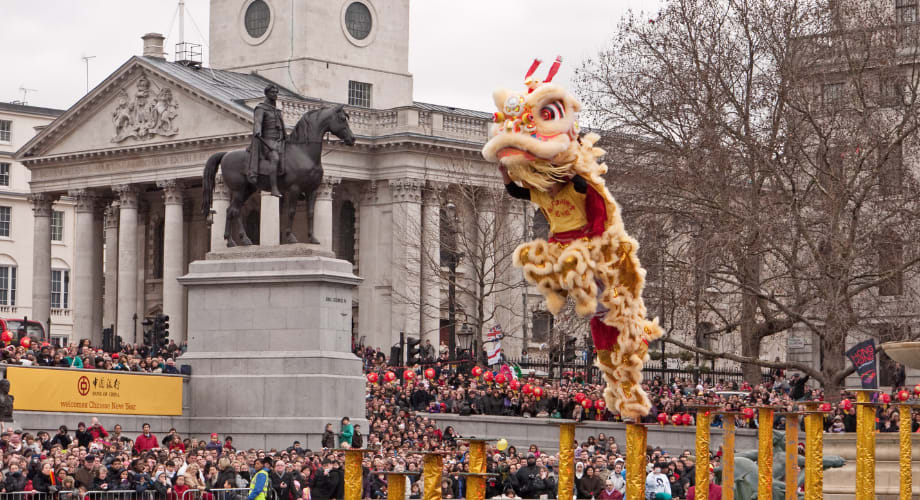
London hosts the largest Chinese New Year celebration in Europe and one of the largest outside Asia.
Festivities centre around Chinatown in Soho, where Gerrard Street and Lisle Street are lined with lanterns and food stalls. The main parade moves through the West End towards Trafalgar Square, where stage performances, lion dances and cultural showcases draw tens of thousands of spectators.
In Leicester Square and along Shaftesbury Avenue, the celebration expands with live music, street performances and family-friendly events. Restaurants fill with diners ordering long-life noodles and whole fish, while red envelopes exchange hands between generations.
For travellers in Europe wondering where to celebrate Chinese New Year, London offers scale, spectacle and accessibility in equal measure. The event is citywide and openly multicultural, woven into the rhythm of the capital rather than confined to a single district.
San Francisco, USA
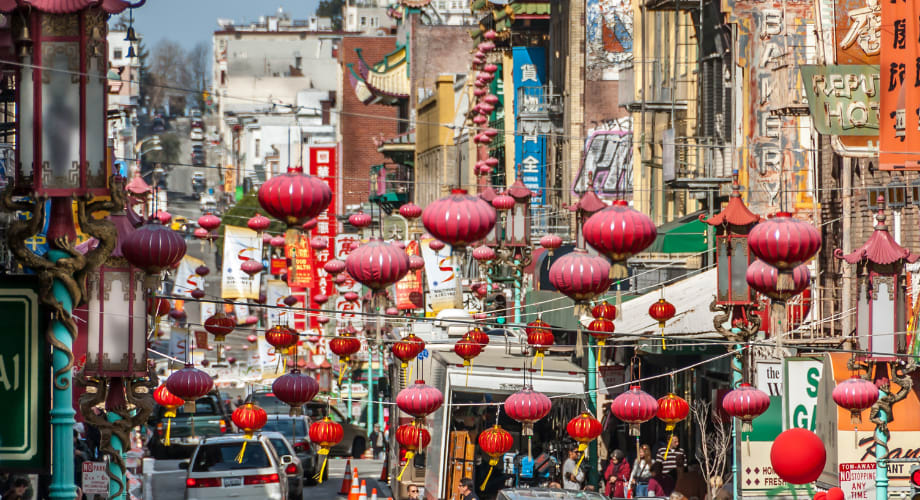
San Francisco’s Chinese New Year celebrations are shaped by history. The city is home to the oldest Chinatown in North America, established during the Gold Rush of the 1850s when Chinese immigrants arrived seeking opportunity in California.
Today, the annual Chinese New Year Parade runs from Market Street to Chinatown and remains one of the largest outside Asia. The highlight is the 268 foot Golden Dragon, carried by a team weaving through Grant Avenue and Kearny Street.
Melbourne, Australia
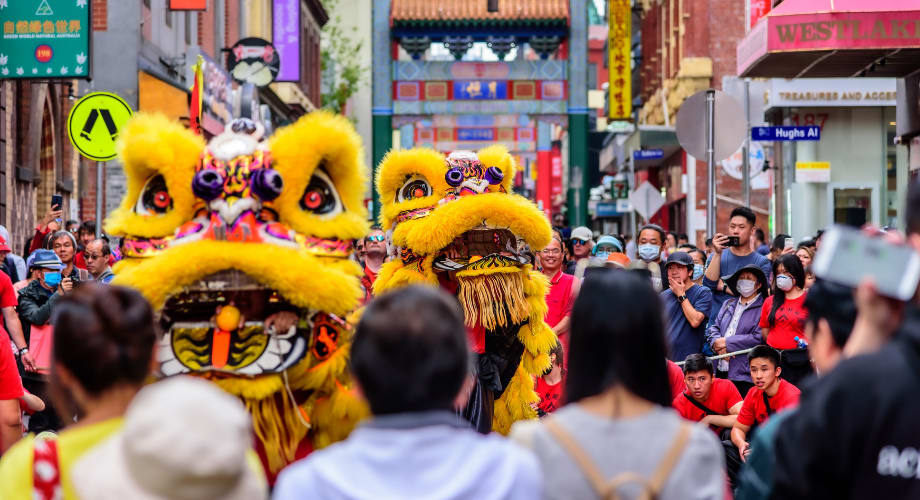
Melbourne’s Chinese New Year celebrations are shaped by more than 170 years of migration. Chinese settlers arrived in Victoria during the gold rush of the 1850s, and Chinatown on Little Bourke Street has operated continuously since that era. It is widely regarded as the oldest Chinatown in the Southern Hemisphere.
During Chinese New Year, Little Bourke Street fills with lion dances, firecrackers and street performances, continuing traditions first brought to Australia by early migrants. Beyond the CBD, and in more recent decades, Box Hill has become a major centre for Melbourne’s Chinese community, shaped by later waves of migration from Hong Kong, mainland China and Southeast Asia. Restaurants are fully booked for reunion dinners, and the atmosphere extends well beyond the CBD.
Where to stay: Avani Melbourne Central Residences and Avani Melbourne Jazz Corner Residences keep you within walking distance of Little Bourke Street’s Chinatown festivities. In Box Hill, Avani Melbourne Box Hill Residences offers a front-row seat to one of Australia’s most vibrant Chinese communities, especially lively during reunion dinners and the days that follow.